When the Met Gala’s theme dropped—vague, cerebral, and dripping with artistic implication—fashion insiders didn’t panic. They leaned in. “The most ambiguous theme yet” isn’t a flaw; it’s an invitation. This year’s dress code, straddling the line between conceptual art and sartorial performance, has stylists reimagining everything from literal interpretations of the Mona Lisa to trompe l’oeil naked dresses that challenge perception itself.
The challenge isn’t just dressing a celebrity. It’s dressing an idea—one so fluid that even curators are whispering interpretations behind closed doors. So, what happens when fashion collides with ambiguity? We spoke with six top celebrity stylists behind some of the most iconic Met Gala looks of the past decade. Their answers reveal a spectrum of vision: from minimalism that echoes Renaissance restraint to maximalist ensembles that blur the line between model and masterpiece.
The Theme That Defies Definition
This year’s Met Gala theme resists easy categorization. It’s not “Heavenly Bodies” or “Camp”—no clear aesthetic lane. Instead, it’s built on a paradox: a call to elevate fashion as art, while simultaneously asking guests to embody art through fashion. Stylists describe it as “a Rorschach test in fabric form.”
“The theme doesn’t give you a color palette, a silhouette, or a period,” says Lana Prescott, stylist for Florence Pugh and Michaela Coel. “It forces you to ask: What is art to the wearer? Is it a Botticelli birth? A Warhol print? Or the way light hits skin under gallery lighting?”
That open-endedness is both freeing and terrifying. On one hand, it allows for radical originality. On the other, it risks misfires—costumes that feel like Halloween interpretations of “art” rather than authentic expressions.
Common pitfalls? Over-literalism. Think: someone in a full Mona Lisa print from head to toe, complete with fake mustache. “That’s not interpretation,” says stylist Jamal Wright, who dressed Donald Glover in 2022. “That’s merch.”
Naked Dresses: Vulnerability as Art
Few elements spark more debate than the naked dress. This year, stylists predict a resurgence—reimagined. No longer just sheer fabric and body paint, the new breed of nude look is conceptual: strategic voids, skin as canvas, illusionary cutouts that mimic brushstrokes.
“It’s not about exposure,” says Mira Chen, known for her work with Zendaya. “It’s about restraint. About asking: When is skin the most powerful fabric?”
Case in point: Rihanna’s 2018 Guo Pei cape was a masterclass in weight and silence. This year, Chen is exploring a look where the dress appears to dissolve at the edges, revealing nothing but lighting effects that simulate golden-hour glow on bare shoulders.
Stylist Insights: - Use of thermal-reactive fabrics that change opacity with body heat - 3D-printed mesh that mimics anatomical form without revealing - Strategic embroidery that draws attention away from nudity, creating optical illusions
The danger? Crossing from artful to gratuitous. “If it feels like a red carpet, you’ve failed,” warns Chen. “It should feel like a gallery opening.”
The Mona Lisa Effect: Iconography Reinterpreted
The Mona Lisa looms large—not just as a painting, but as a cultural cipher. Stylists aren’t dressing people as Mona; they’re dressing them through her.
“We’re not putting wigs and Renaissance collars on people,” says Antoine Leclair, stylist for Timothée Chalamet. “We’re asking: What makes something timeless? What makes a gaze iconic?”
Leclair’s approach involves deconstructing the painting’s elements: - The enigmatic smile → asymmetrical hemlines or one-sided embellishments - The sfumato technique → layered tulle with gradient dye, blurring edges - The pose → structured shoulders with relaxed, natural draping below
One A-lister is reportedly arriving in a charcoal-gray suit with a single, embroidered eye following the lapel line—subtle, unsettling, unforgettable.
“This isn’t cosplay,” Leclair emphasizes. “It’s about emotional resonance. If someone glances at the look and feels something they can’t name—that’s the goal.”
Art Movements as Moodboards
With no single directive, stylists are turning to art history for structure. But they’re not replicating movements—they’re translating them.
| Art Movement | Fashion Translation | Celebrity Example |
|---|---|---|
| Surrealism | Floating accessories, dislocated proportions | Billie Eilish in a dress with detached sleeves hovering via magnets |
| Minimalism | Monochrome, no seams, silence in fabric | Tilda Swinton in a single pane of translucent resin-like material |
| Baroque | Gilded texture, dramatic volume, religious motifs | Lil Nas X on a throne-like platform with a jeweled codpiece |
| Cubism | Angular cuts, fragmented patterns, mismatched panels | Harry Styles in a suit split into geometric zones of color and texture |
“The trick is to avoid looking like a Pinterest board,” says stylist Drea Valencia. “You can’t just throw on a Dali clock and call it a day. The emotion has to carry through.”
For one client, Valencia is using a dress that appears solid from afar but, up close, reveals thousands of hand-painted micro-portraits—each a different expression of “the muse.”
When the Dress Is the Art
Some stylists are taking the theme literally: the garment isn’t inspired by art—it is art.
That means collaborating with visual artists, not just designers. Think: a gown with embedded LED screens showing generative AI art, or a suit painted live during the afterparty.
“We’re commissioning pieces that will be auctioned post-Gala,” says Jamal Wright. “The dress lives beyond the carpet. It’s not disposable fashion.”
One look in development involves a biodegradable silk dress coated in spores that bloom into actual mold over 72 hours—“a commentary on decay and beauty,” Wright explains.
Of course, wearability remains a concern. “You can’t have someone leaking paint or sprouting mushrooms halfway through dinner,” laughs Antoine Leclair. “There’s a balance between concept and function.”
Celebrity as Canvas: The Role of the Wearer
No look succeeds without the wearer embodying the concept. “A gown can be genius,” says Mira Chen, “but if the person doesn’t perform it, it’s just clothes.”
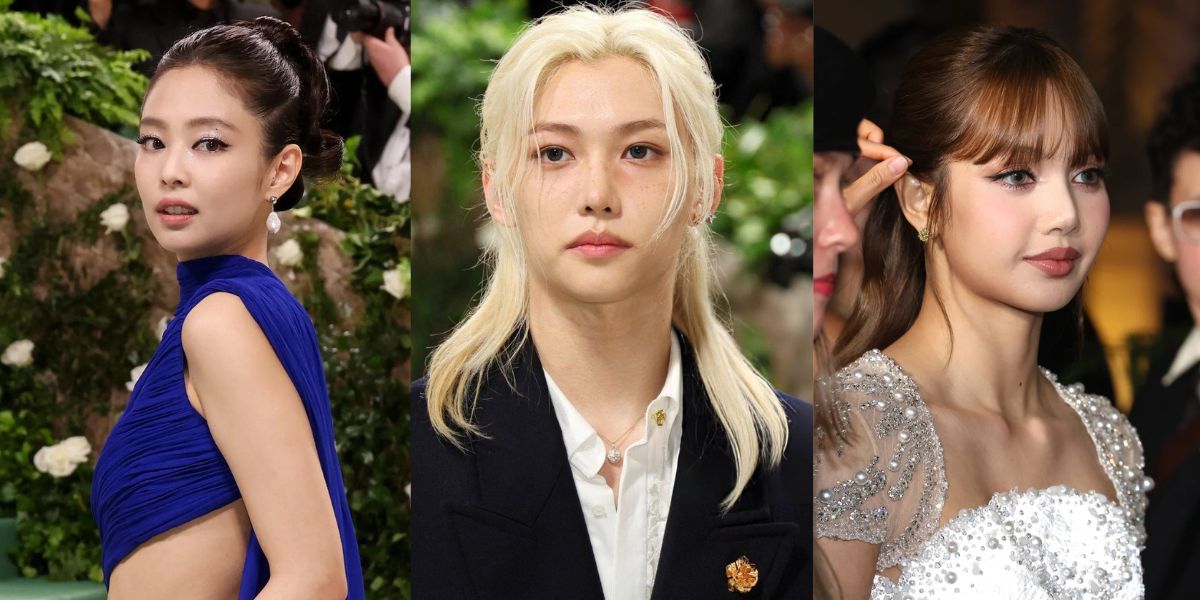
That’s why top stylists are now hiring acting coaches for red carpet prep.
Zendaya’s 2021 black-and-white metamorphosis wasn’t just a dress—it was a slow reveal, a performance. This year, Chen is preparing her client to deliver a 30-second “living portrait” moment on the steps: stillness, a slow turn, a gaze held just a beat too long.
“It’s not enough to wear art,” Chen says. “You have to become the exhibit.”
Stylists are also advising against over-accessorizing. “One powerful look beats five loud ones,” says Prescott. “Let the art speak.”
What Will Actually Work on the Carpet? With so much conceptual ambition, what’s likely to land?
Based on stylist insights, winning looks will share these traits:
- Emotional clarity: You don’t have to “get it” immediately, but you should feel something.
- Technical mastery: The craftsmanship must justify the concept.
- Subversion of expectation: A man in a ballgown? A woman in armor? Yes—but only if it serves the idea.
- Memorable silence: The best looks often aren’t the loudest. Think: Celine Dion’s 1999 Bob Mackie chariot entrance—simple, but mythic.
And the dark horse? The “anti-look.” One stylist is dressing a client in a plain white cotton shift—identical to the ones worn by museum mannequins. “It’s a critique of fashion as display object,” they say. “Will it be mocked? Probably. Will it be remembered? Absolutely.”
The Line Between Genius and Gimmick
Not every concept survives contact with reality.
Past Met Galas have seen misfires: the edible dress (melted under lights), the inflatable gown (popped during photos), the dress with live bees (retired after five minutes).
This year’s ambiguity increases the risk. “When the theme is unclear, the safety net disappears,” says Prescott. “You either soar or faceplant.”
- Stylists recommend a “rule of three” test before finalizing a look:
- Can you explain the concept in one sentence?
- Does it reflect the celebrity’s identity?
- Would it be compelling in a black-and-white photo?
“If you can’t pass that,” says Chen, “it’s probably noise.”
Final Predictions: What We’ll See on the Steps
Based on insider briefings and prototype leaks, here’s what’s likely to dominate:
- Naked illusion dresses with embedded tech that responds to crowd noise
- Monochrome Renaissance silhouettes with one surreal twist (e.g., a floating headpiece)
- Artist collaborations where the garment doubles as a limited-edition artwork
- Gender-fluid takes on classical portraiture—think: a non-binary take on Caravaggio’s boys
- Performance-based entries where the look evolves during the night
And yes—someone will wear a direct Mona Lisa reference. But if they’re smart, it’ll be ironic. A tote bag with her face. A shoe print. A whisper of a smile.
Because in the end, the most powerful art isn’t the loudest. It’s the one that makes you lean in and ask, What did I just see?
For stylists, that’s the win. Not likes. Not headlines. But the moment silence falls, and a thousand eyes lock onto something they can’t quite name.
Dress for that moment. Everything else is decoration.
FAQ
What should you look for in From Naked Dresses to Mona Lisa Suits: Stylists Decode the Met Gala’s Va? Focus on relevance, practical value, and how well the solution matches real user intent.
Is From Naked Dresses to Mona Lisa Suits: Stylists Decode the Met Gala’s Va suitable for beginners? That depends on the workflow, but a clear step-by-step approach usually makes it easier to start.
How do you compare options around From Naked Dresses to Mona Lisa Suits: Stylists Decode the Met Gala’s Va? Compare features, trust signals, limitations, pricing, and ease of implementation.
What mistakes should you avoid? Avoid generic choices, weak validation, and decisions based only on marketing claims.
What is the next best step? Shortlist the most relevant options, validate them quickly, and refine from real-world results.